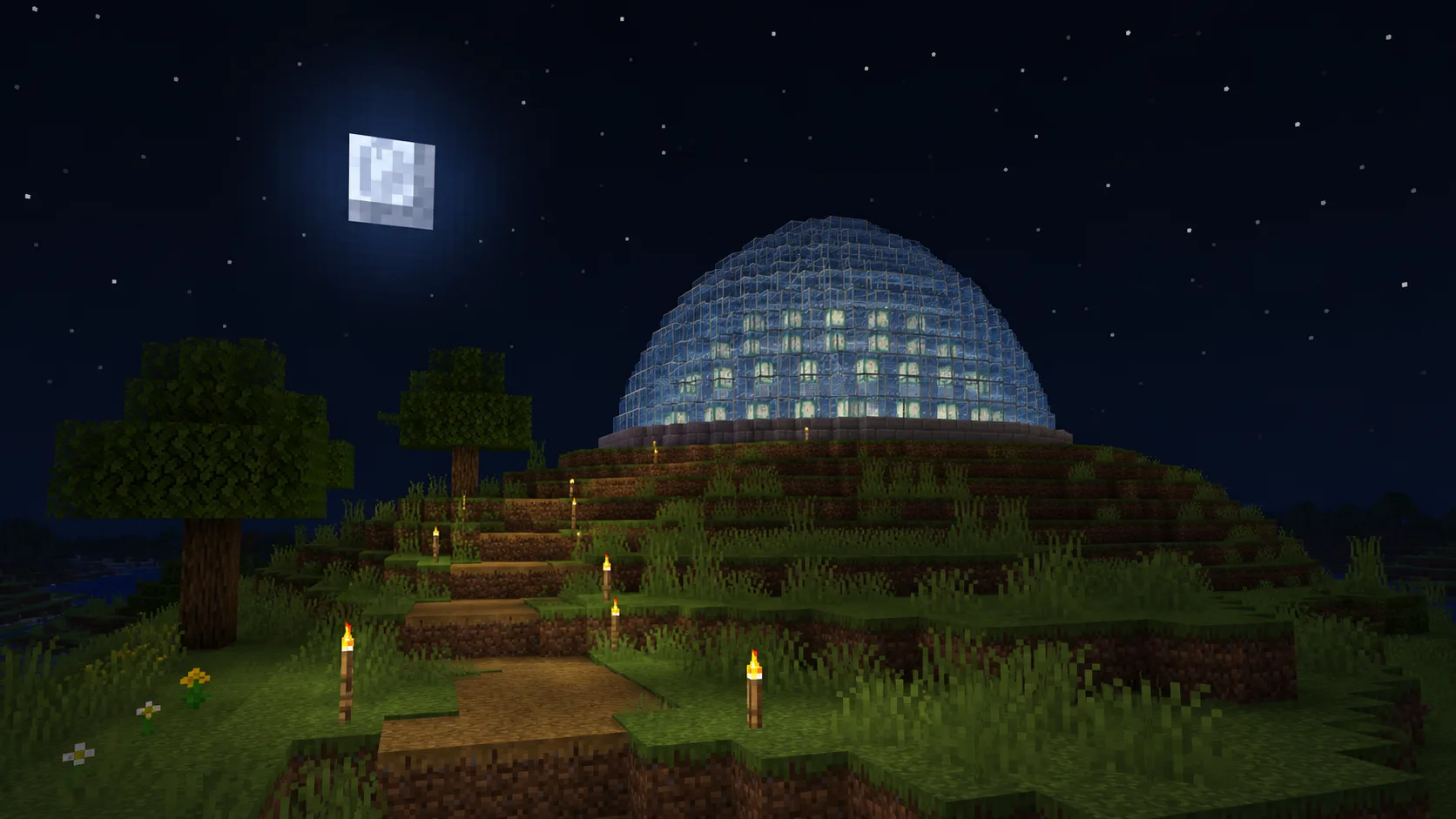
Glass Observatory
A clear dome over a raised platform turns any hilltop into a stargazing room. Larger diameters keep the glass curve smooth.
A dome is a stack of shrinking circles — building one is a matter of copying one ring at a time:
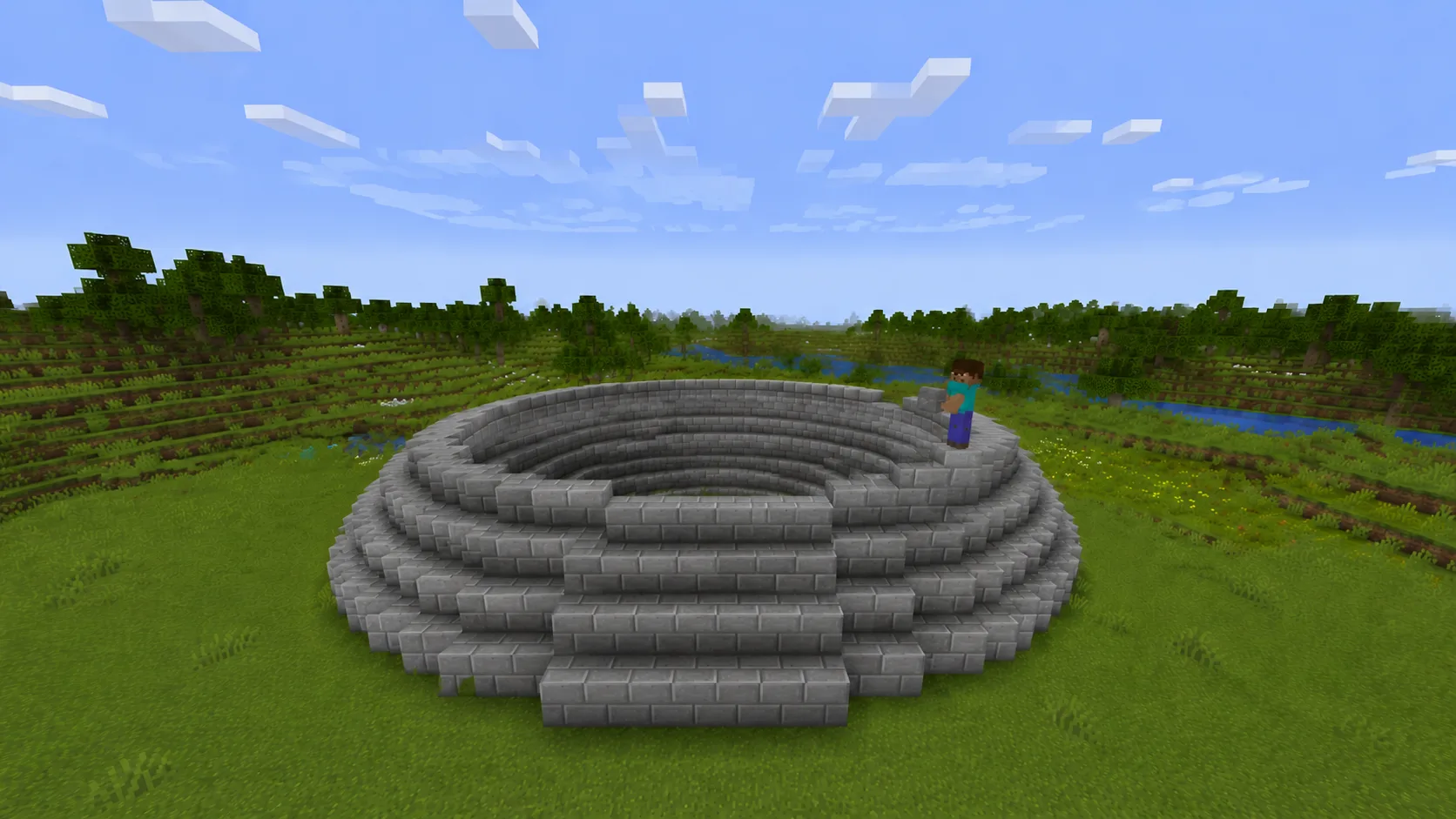
Ring-by-ring stone dome under construction
Set Diameter to the footprint. Odd sizes keep a single center block — easier to line up.
Mark the center and count out to the edge — the circle center technique keeps every ring symmetrical.
Shape Layer 1 is the widest ring. Copy it block for block — every layer above sits on this one.
Step the slider up and place each ring on the last. Build from inside; use scaffolding for the peak.
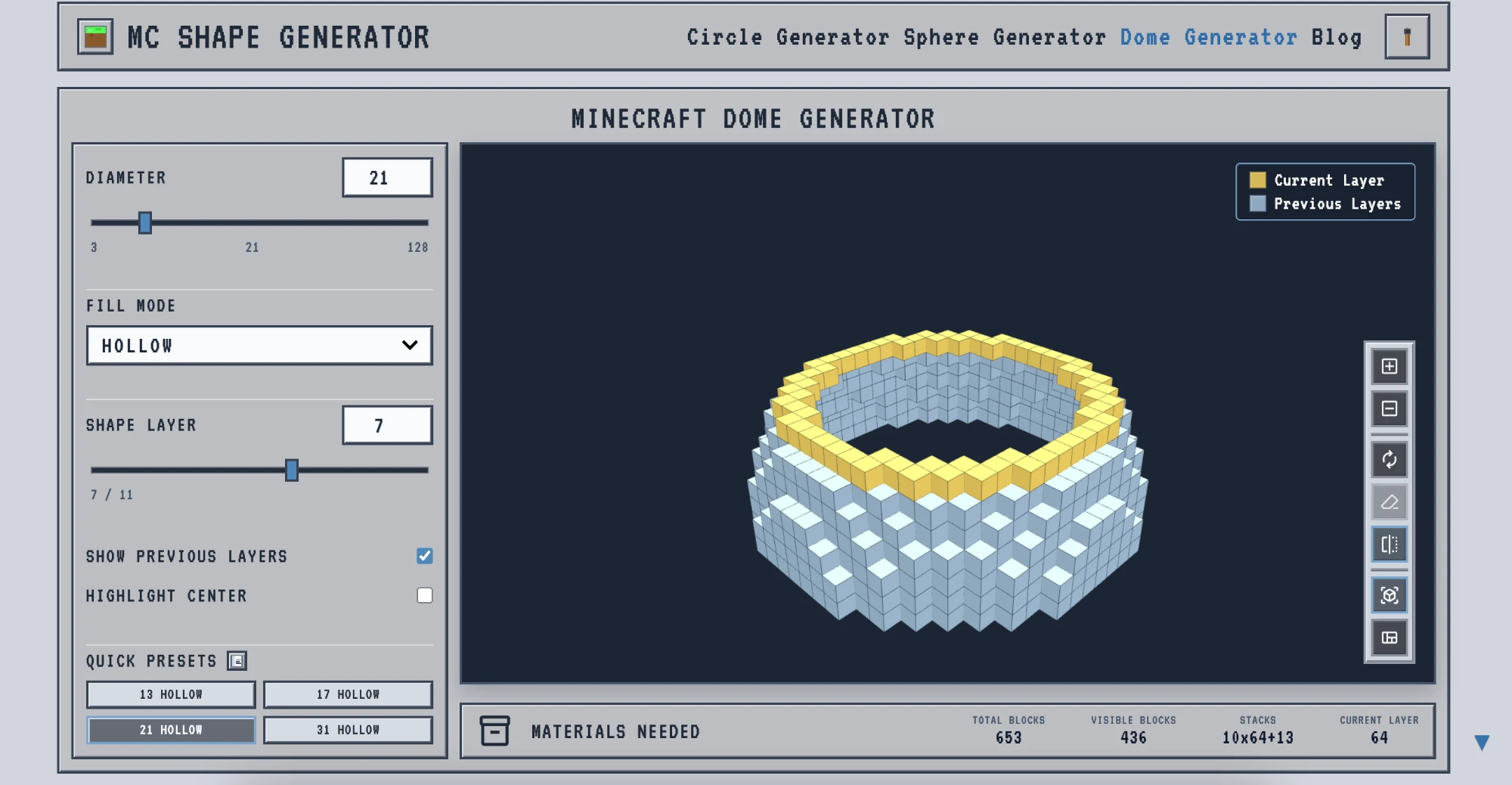
Current Layer shows how many blocks this ring needs — catch a miss now, not five layers later.
The last rings shrink fast. Stairs and slabs soften the top if the cluster looks blocky.
Want the same walkthrough with screenshots and worked examples? Follow the full dome building tutorial.
A dome is one of the hardest shapes to eyeball in Minecraft — the curve has to stay even on every side, and one miscounted block leaves a dent you only spot once the build is done. This Minecraft dome generator does the counting for you, ring by ring.
Set the Diameter and the tool caps the build at the hemisphere — the dome itself. The Shape Layer slider walks you up from the base ring to the peak: the layer you place now shows in yellow, finished layers in gray. The preview is flipped to roof orientation by default, and the Materials Needed panel keeps a live Total, Visible, Stacks and Current Layer count as you drag. Keep Fill Mode on Hollow for a dome you can stand under. Building a full ball, not a half? Use the Minecraft Sphere Generator.
Dome size comes down to two things: how round the curve reads, and matching the base. Below diameter 11 a dome is more stair-step than curve — fine for a small turret cap, rough for anything meant to look deliberate. Diameter 13 to 21 is the everyday range, and 25 to 31 is where the stepping disappears for grand builds. Whatever size you pick, set the diameter to the footprint it caps — the wall, platform or base it sits on — before you build, not after.
Keep Fill Mode on Hollow for nearly every dome: you build a dome to stand under it, so the interior should stay open, and a hollow shell costs a fraction of a solid one. Solid only earns its cost on tiny decorative caps. The counts below are for hollow domes, computed with the same engine the Minecraft dome generator uses; for how the four material counts relate, see the Minecraft sphere block count guide.
| Diameter (blocks) | Dome height | Blocks (hollow) | Stacks | Best for |
|---|---|---|---|---|
| 9 | 5 layers | 121 | 1x64+57 | Turret caps, wells, tiny gazebos |
| 13 | 7 layers | 245 | 3x64+53 | Single-room domes, small observatories |
| 17 | 9 layers | 405 | 6x64+21 | Medium domes — bases, greenhouses |
| 21 Sweet spot | 11 layers | 653 | 10x64+13 | Grand halls, cathedrals, arenas |
| 31 | 16 layers | 1,353 | 21x64+9 | Observatories, stadium roofs |
The classic Minecraft dome — half a voxel sphere. This is what the generator produces: widest ring at the base, closing to a cap.
Stop two or three layers below the peak and roof the opening flat. Reads lower and wider — right for squat towers and huts.
Generate a larger diameter than the room below and build only its top rings — a big footprint capped with barely any height.
For a full ball — underwater bases, planets — use the sphere generator instead.
Odd diameters give a single center block — ideal over a beacon or door. Even diameters give a 2×2 center for double-door symmetry.
Outline each ring in dirt or wool, check the curve from a distance, then swap in the real material once it reads right.
The harshest jumps in the curve read far rounder with stairs on top and upside-down stairs tucked under the overhangs.
Stand on the ring you just finished instead of towering up the outside — scaffolding reaches the peak safely.
Once roofed, any dome past diameter 15 is dark enough to spawn mobs inside. Drop torches every few rings, not at the end.
Glass drops nothing without Silk Touch, so for glass domes read the exact pane count from the Materials panel before placing.
Orbit, zoom and flip a real voxel model of your dome instead of squinting at a flat pixel chart.
The ring you are placing shows in yellow while finished rings stay gray — a construction checklist you can rotate.
Total blocks, stacks of 64 and per-layer counts update live as you drag the diameter and layer sliders.
A clear dome over a raised platform turns any hilltop into a stargazing room. Larger diameters keep the glass curve smooth.
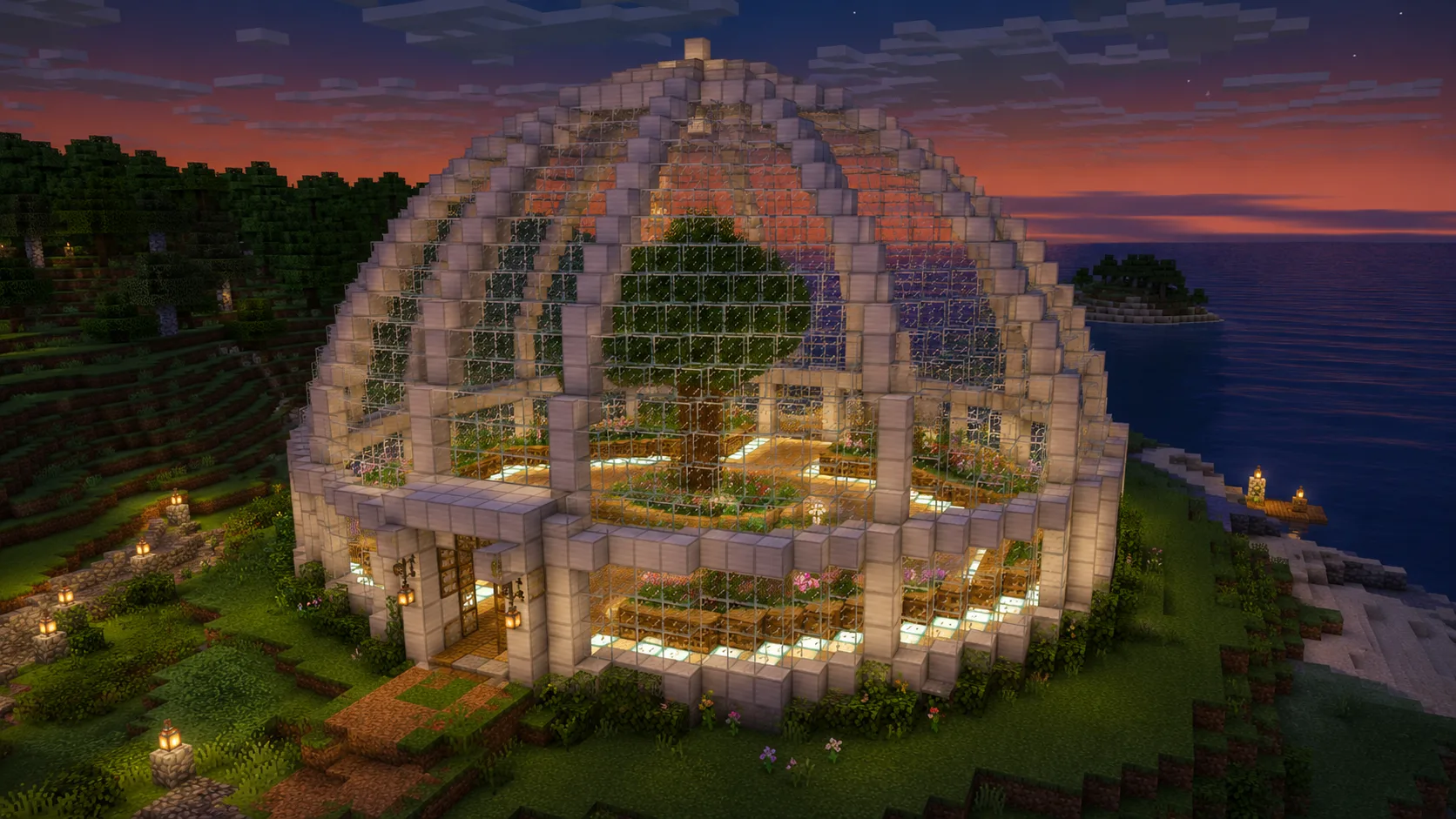
Cap a patch of farmland with a glass dome — light reaches the crops, and the curved shell is a clean garden centerpiece.
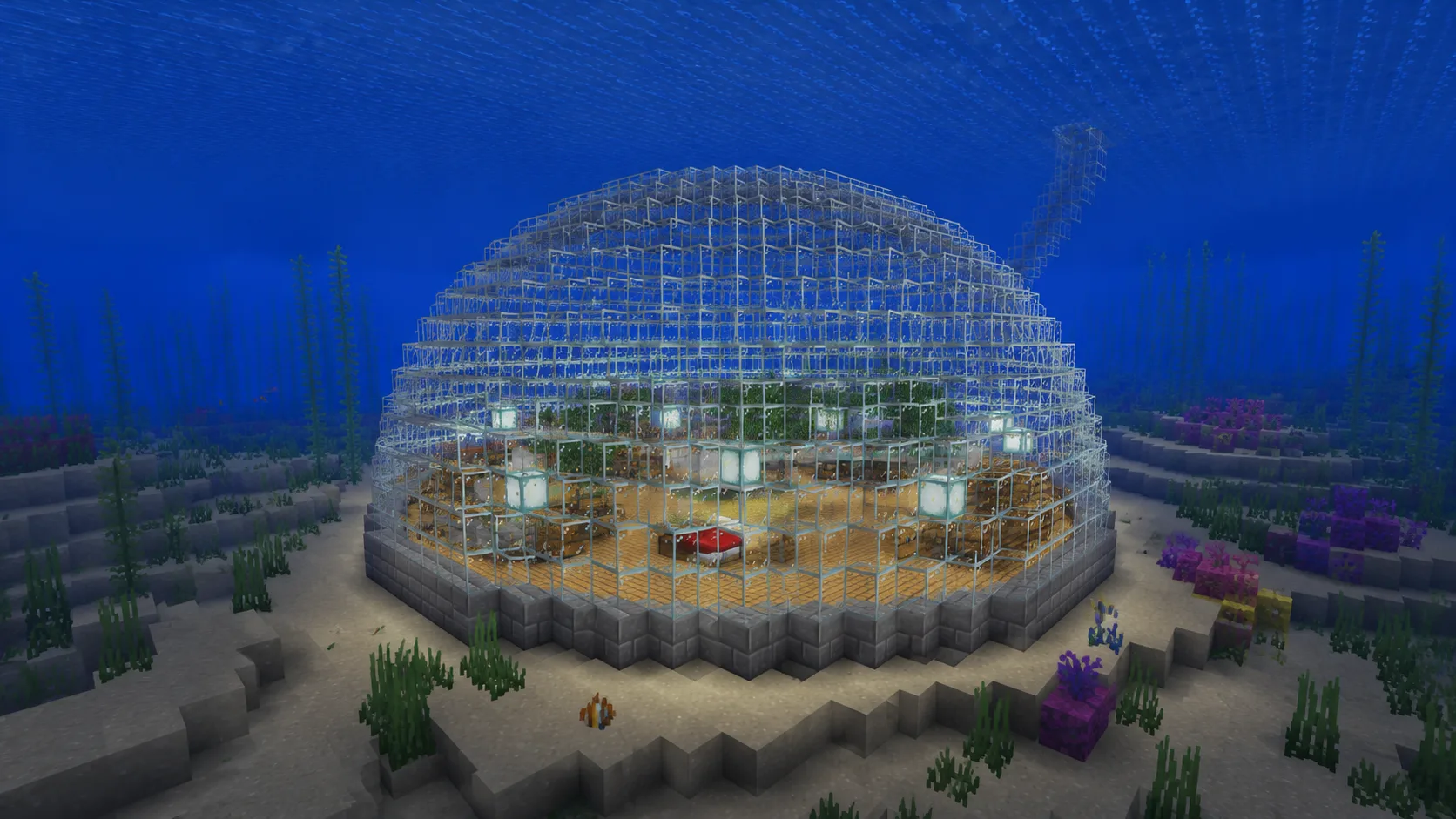
A sealed glass dome on the seabed makes a dry, panoramic base. Hollow mode leaves the full interior open for rooms and farms.
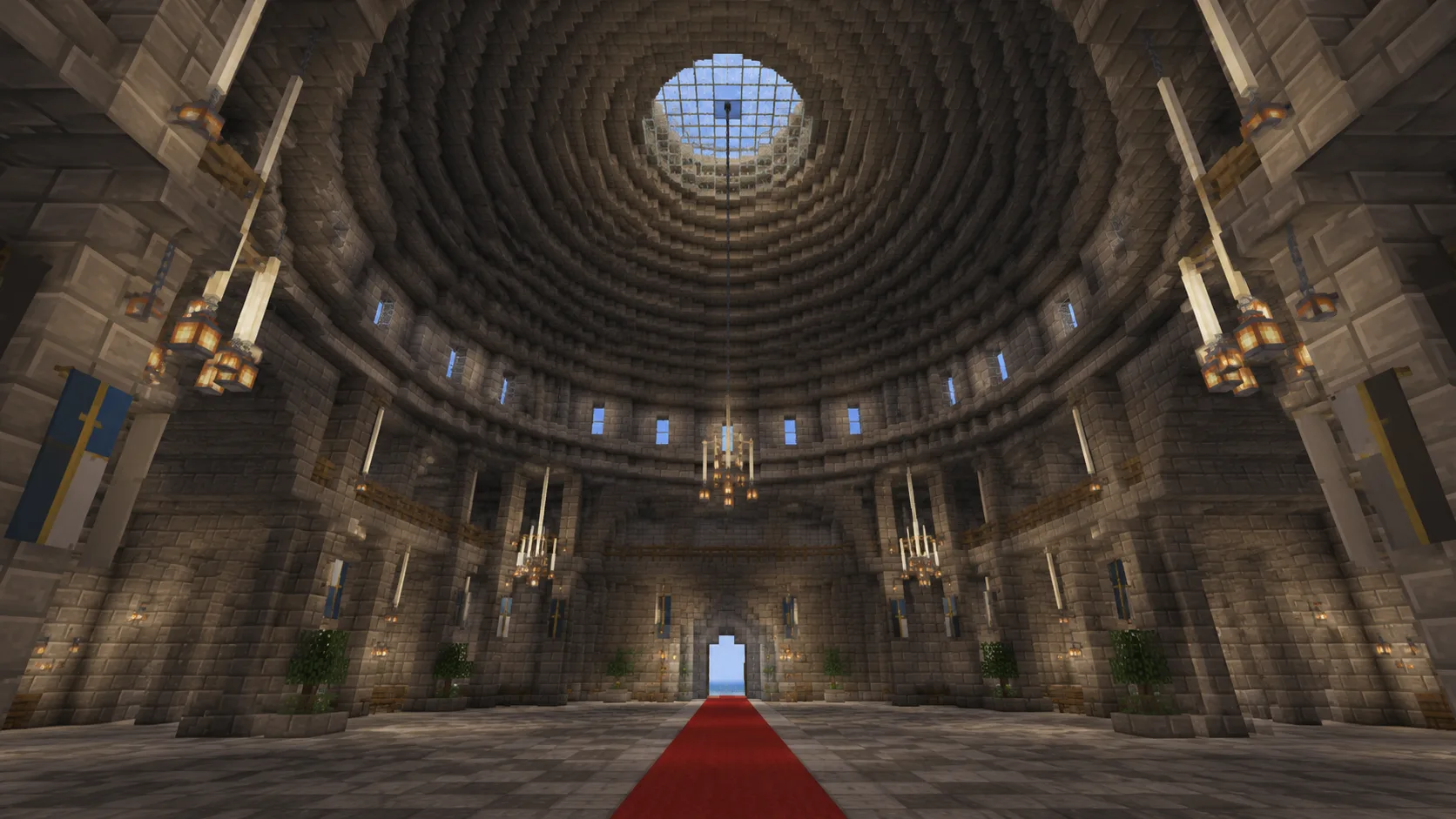
A domed ceiling over a hall, cathedral or capitol-style build. At diameter 21 to 31 the curve reads as real architecture.
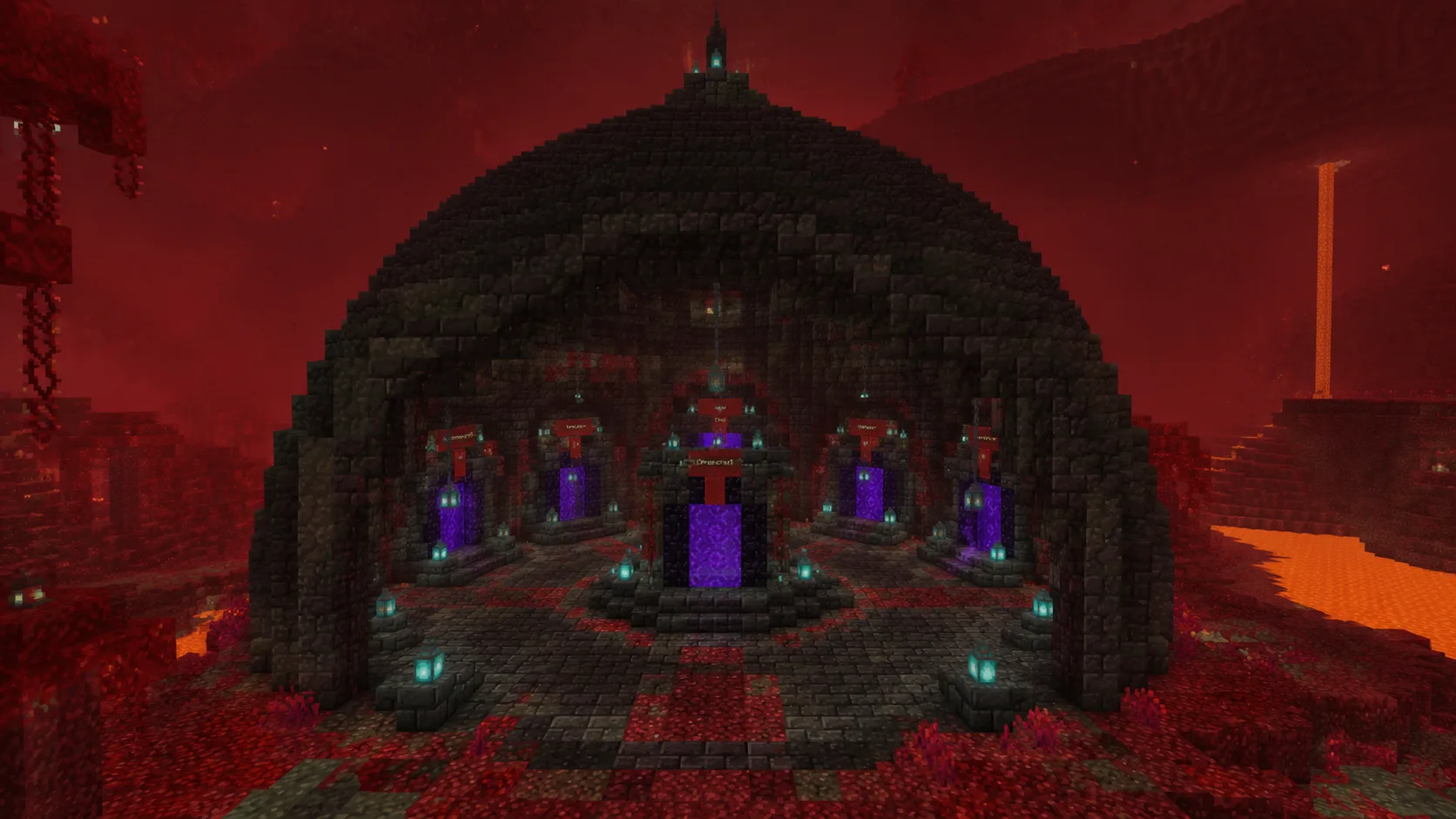
A dome over your portal hub encloses the chaos and gives you a clean, roofed space to organize tunnels and signage.
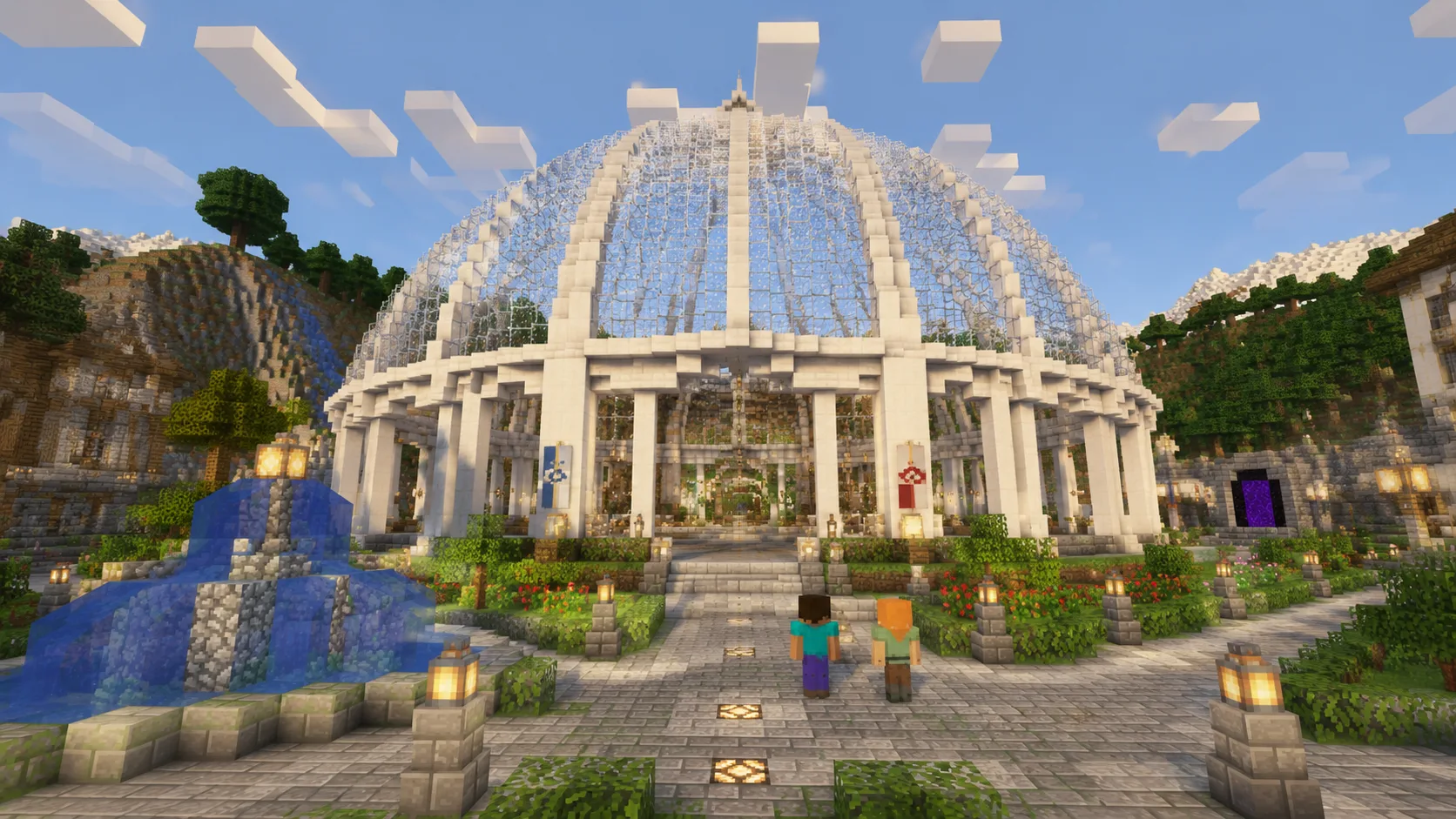
Cap a spawn point or arena with a dome — a landmark visible from far off and shelter for everyone who lands under it.
 Tool
Tool Full 3D spheres with the same layer-by-layer preview and counts.
Open tool →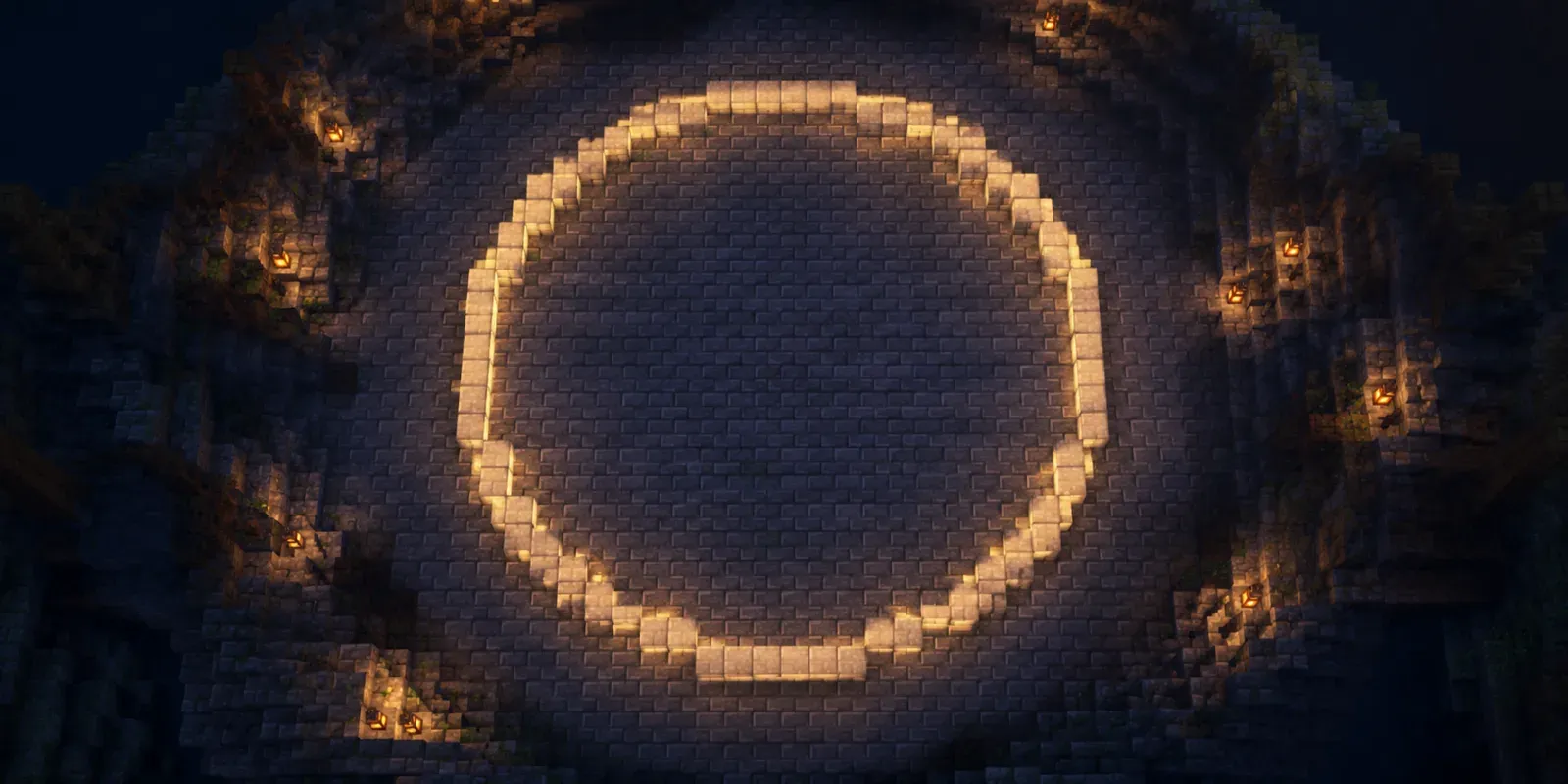 Tool
Tool Flat rings and ellipses — the base ring of every dome starts here.
Open tool → Guide The full walkthrough with screenshots, from base ring to peak.
Read guide →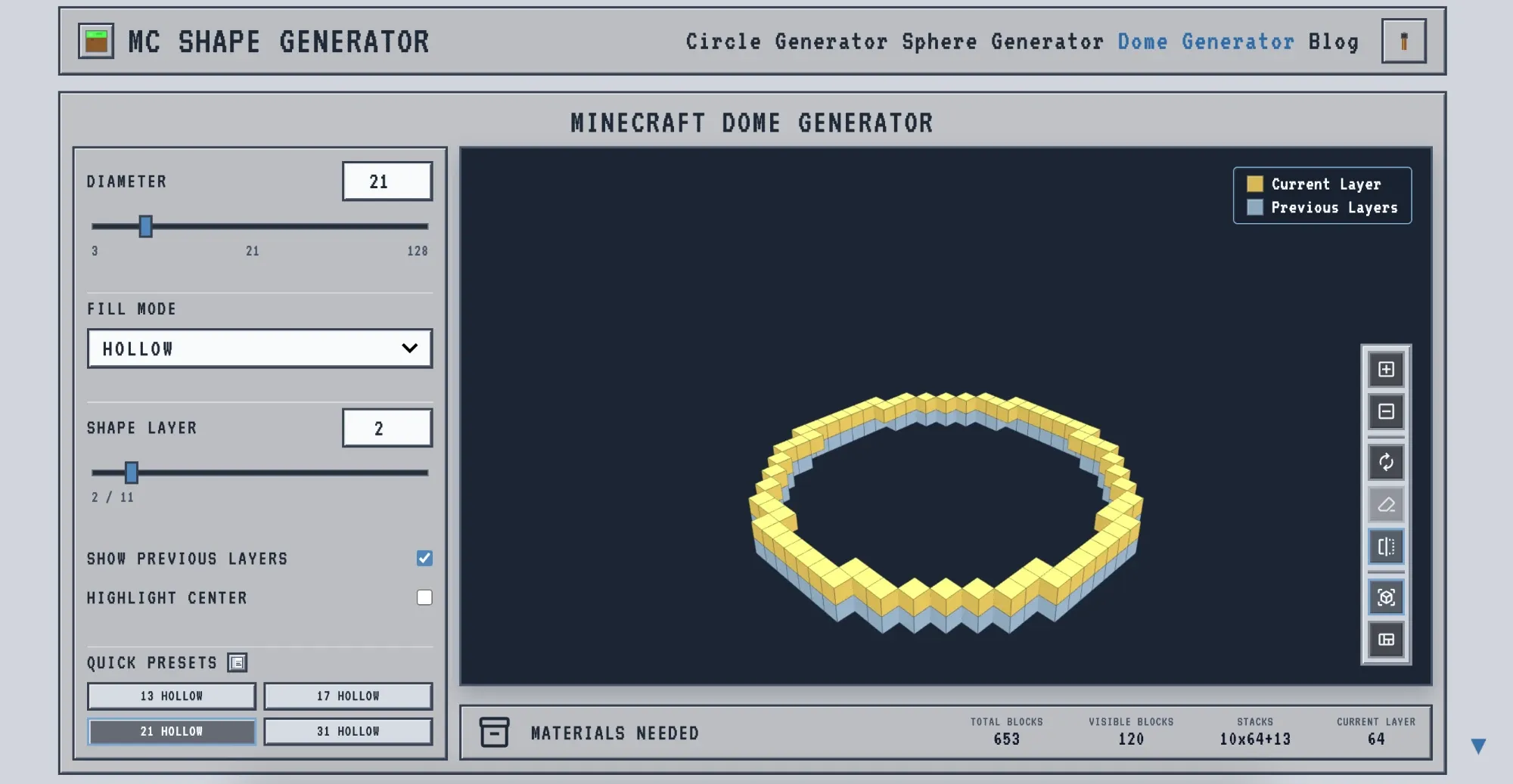 Guide
Guide How many blocks a dome needs at every size, hollow and solid.
Read guide → Guide Materials, lighting and build order for glass shells and greenhouses.
Read guide →Did the blueprint work? Stuck? Tell us what you're building